- TESDA
Free TESDA Training with Allowance: Face-to-Face Scholarship (2026)
- Nico Vela
- 22 Oct 2026
The TESDA Online Program (TOP) is not the training slot with an allowance. TOP is a set of free, self-paced online courses. A TESDA scholarship is a separate seat with a training provider, often face-to-face, and many programs include a Training Support Fund.
The program names in this guide come from TESDA Circular No. 014, series of 2026, the Omnibus Guidelines for the Implementation of FY 2026 TESDA Scholarship Programs, issued on February 2, 2026. SiteDecide is an independent educational information resource and is not affiliated with TESDA. Slots are limited, and the entry requirements of a qualification can change.
How is a scholarship different from TOP?
TOP is the online catalog on e-TESDA. You can enroll with no tuition and study on your own schedule. When you finish, you may receive an e-certificate of completion. That enrollment does not include a daily allowance. A National Certificate still requires a separate competency assessment, and that assessment has a fee. The steps are in the free TESDA online courses guide.
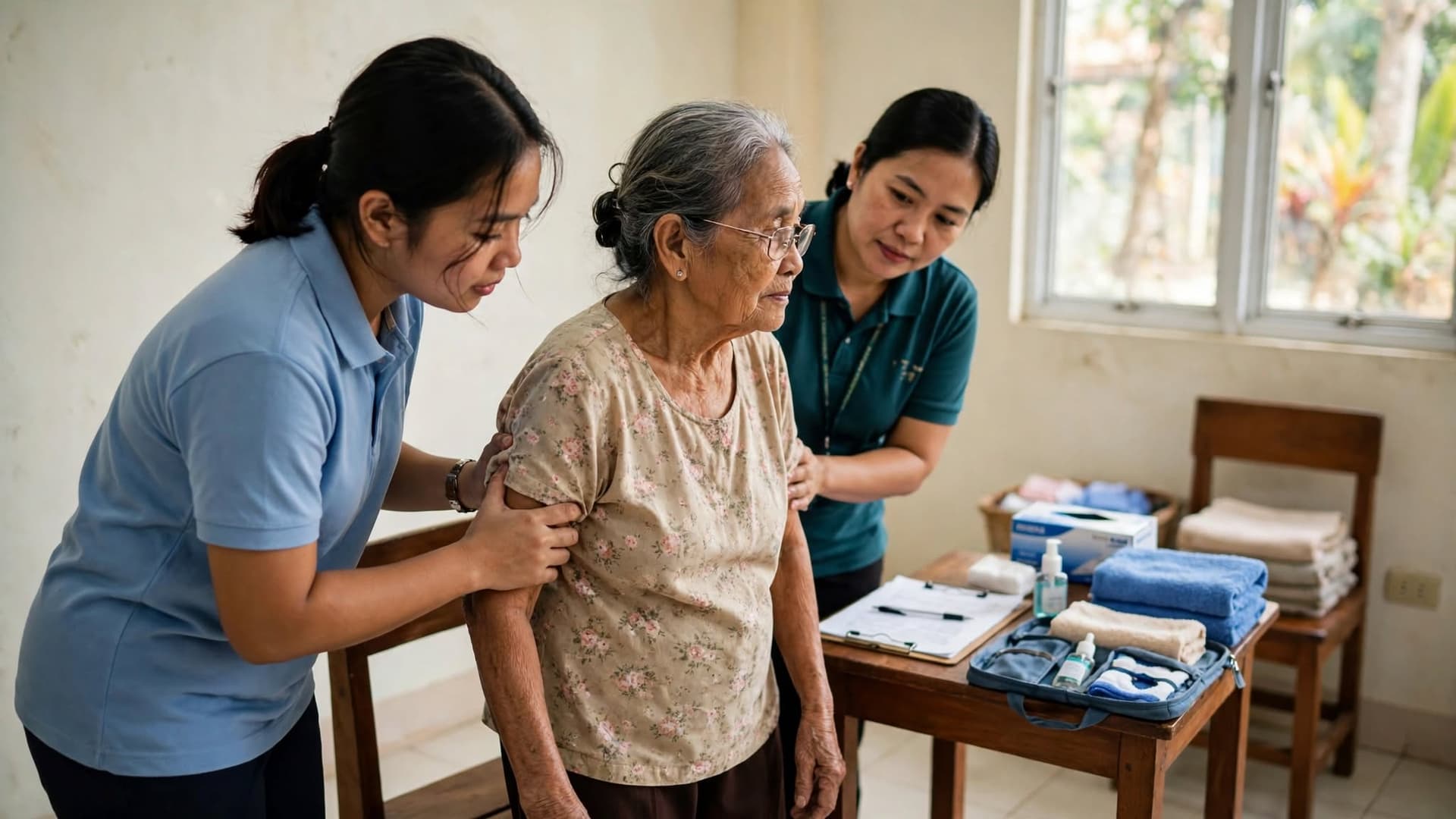
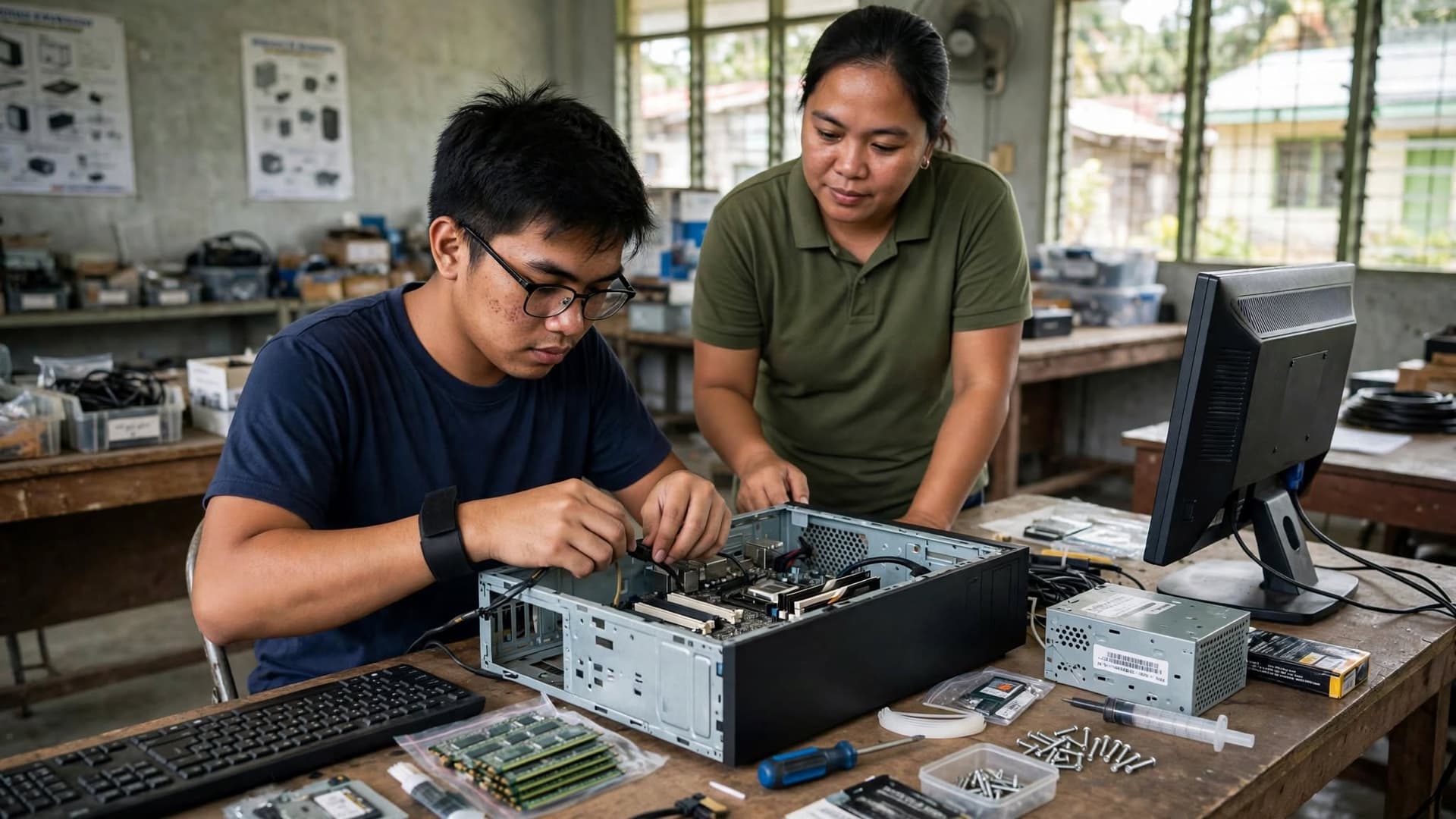
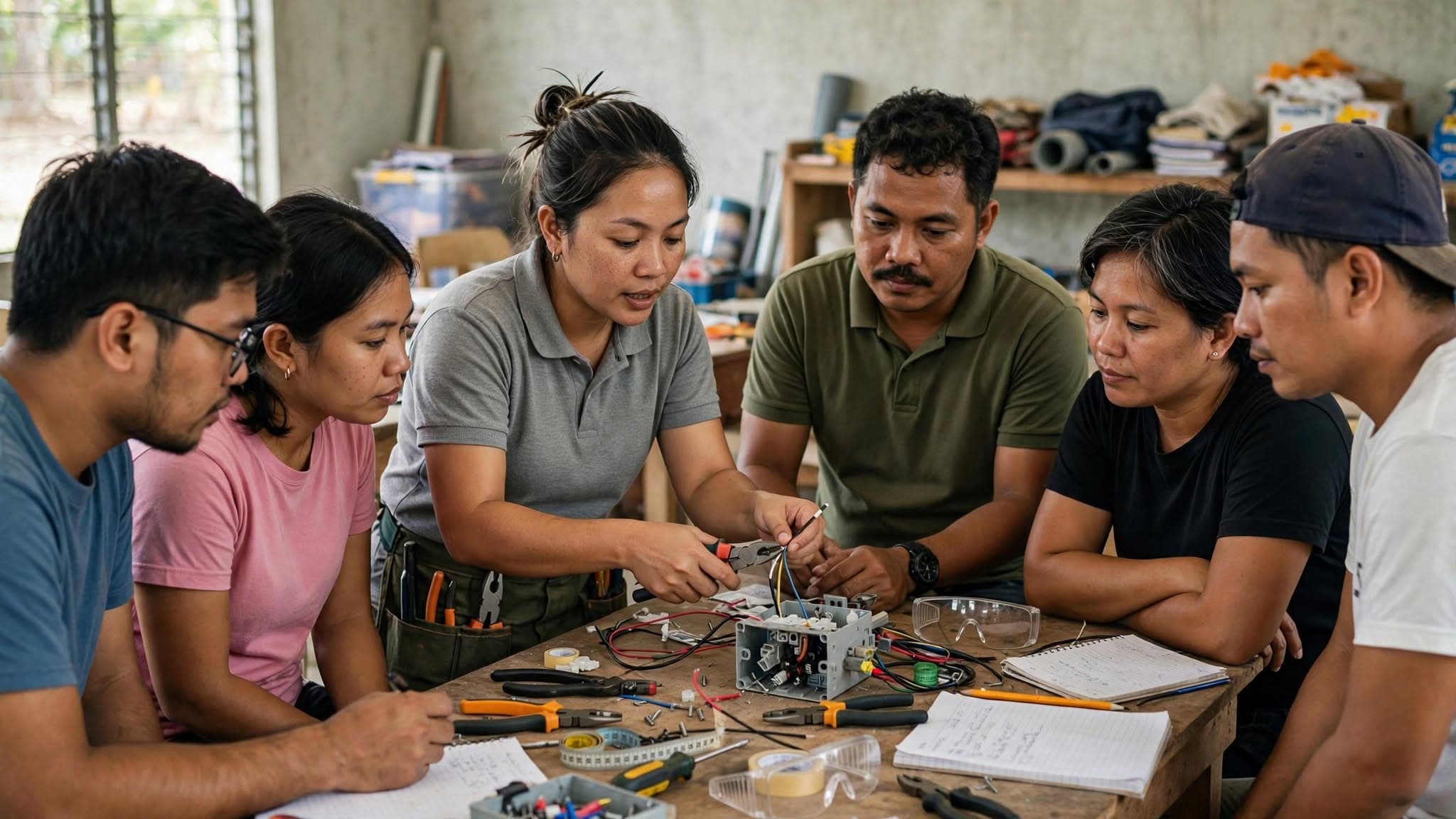
A scholarship is a funded training seat. It has a schedule, a trainer, and attendance. The circular defines face-to-face learning as instructor-led training in the classroom and workshop of the TVET provider.
| TESDA Online Program | TESDA scholarship | |
|---|---|---|
| Where you study | Online, at your own pace | With a training provider, on a schedule. This is often face-to-face. |
| Training fee | No tuition | No tuition. The scholarship covers the training cost. |
| Allowance | None from TOP enrollment | A Training Support Fund of PHP 160 per day on many programs |
| Slot | Open course catalog | Limited slots posted by a TESDA office and the training center |
| Assessment | Separate, and it has a fee if you want an NC | Free national competency assessment when the program covers it |
A scholarship can also be fully online. Under Circular No. 014, s. 2026, a scholar in a full online program, whether asynchronous or synchronous, receives a PHP 1,000 internet allowance for the whole course instead of PHP 160 per day. That is not the TOP catalog. It is still a scholarship slot.
Overseas scholars are entitled to free training and assessment only, under the same circular.
What are the TESDA scholarship programs in 2026?
These are the nine programs in the scope of Circular No. 014, s. 2026. The March 31, 2026 amendment, Circular No. 014-A, s. 2026, kept the same names.
| Program | What it is for |
|---|---|
| Training for Work Scholarship Program (TWSP) | Skills training to fill job vacancies in priority sectors. Priorities include AI and related technologies, creative industries, semiconductors and electronics, and healthcare-related programs. Most TWSP programs must be eligible for assessment, and beneficiaries take the mandatory assessment. |
| Tulong Trabaho Scholarship Program (TTSP) | Industry-linked training under Republic Act No. 11230 for unemployment and job-skill mismatch. It includes enterprise-based training, micro-credential courses, and training for OFWs. |
| Private Education Student Financial Assistance (PESFA) | Financial assistance for marginalized students in private TVET providers, in post-secondary non-degree courses, under Republic Act No. 8545. |
| Special Training for Employment Program (STEP) | Community-based specialty training for employment, self-employment, and livelihood. Priority goes to indigent families in the NHTS-PR, informal sector families, basic sectors under Republic Act No. 11291, and the next poverty level identified by the DSWD. |
| Tsuper Iskolar | Skills training and assessment for stakeholders of the Public Utility Vehicle Modernization Program. |
| Rice Training and Extension Services (RTES) | Rice farming, farm mechanization, and technology transfer under the Rice Competitiveness Enhancement Fund. Primary beneficiaries are farmers in the RSBSA and DA-accredited rice cooperatives and associations. |
| Coconut Farmers Scholarship Program (CFSP) | Training for coconut farmers under the Coconut Farmers and Industry Development Plan. |
| Child Development Workers (CDWs) Scholarship Program | Training for incumbent eligible child development workers, under Republic Act No. 12199. |
| Lifelong Employability and Advancement Program (LEAP) | Short micro-credential courses. LEAP complements TWSP and TTSP. It does not replace them. |
Barangay Kabuhayan Skills Training Program (BKSTP) is also priced in TESDA Circular No. 015-A, series of 2026, the schedule of costs amended in July 2026. Under STEP, at least PHP 100 million is set aside for community-based livelihood programs in 4th, 5th, and 6th class municipalities, consistent with Republic Act No. 9509.
This list does not mean every program is open where you live. The qualification you can take is the one with an approved slot in your region or province.
How much is the allowance?
In Circular No. 014, s. 2026, the Training Support Fund is PHP 160 per day for training that is not fully online. A full online scholarship pays a PHP 1,000 internet allowance for the whole duration instead of the daily fund.
The circular also says the latest approved Schedule of Costs must be followed. Circular No. 015-A, s. 2026, keeps the fund at PHP 160 per day for a maximum of 30 days for TWSP, TTSP, PESFA, and BKSTP. Tsuper Iskolar has its own daily rate and day limit in that schedule. Do not multiply PHP 160 by the full length of a course until you have checked the training notice.
The benefits table includes free skills training. Where the program covers them, it also includes free national competency assessment, entrepreneurship training, and starter toolkits. The circular says these apply where the approved training plan provides them. A toolkit is not automatic for every scholar.
The training cost, including the trainer’s honoraria, utilities, materials, and maintenance, is paid to the provider. It is not released to you as a lump-sum tuition.
Who can apply?
Applicants must be Filipino citizens, according to the circular.
The other requirements depend on the program. If a scholarship rule and the entry requirement in the Training Regulation do not match, the Training Regulation prevails.
For TTSP walk-in or online applicants, the circular is specific:
- A Filipino citizen, at least 15 years old
- Not employed, not in education, and not in training, including displaced workers and the long-term unemployed, or
- An employed worker who wants to upskill, except a worker already being trained by an employer in an EBET company
Recognized industry groups and companies can also nominate workers. TESDA reviews that list before approval.
Other programs use their own lists:
- PESFA: K to 12 or high school graduates from poor households who will enroll in a private TVET provider. The circular’s eligibility table sets a family-income ceiling.
- RTES: farmers listed in the Department of Agriculture’s Registry System for Basic Sectors in Agriculture
- CFSP: people listed in the Philippine Coconut Authority’s National Coconut Farmers Registry System
- CDW: incumbent child development workers listed in the ECCD Information System
- Tsuper Iskolar: displaced persons affected by PUV modernization, and other stakeholders of that program
- STEP: indigent families, informal sector families, and basic sectors, in the order stated in the circular
Some programs use “at least 15 years old.” Others use “at least 18 years old at the end of the training.” Read the slot notice before you prepare documents.
You may take one scholarship at a time, not two at once. You cannot repeat a qualification you have already completed.
Where do you apply?
The official application page is the Biometric-Enabled Scholarship Registration System (BSRS):
Circular No. 014, s. 2026 adopts BSRS as the official web platform for all TESDA scholarship programs. Learner registration, attendance, and reporting run through it. The TESDA Skills Passport app is the mobile interface for learners’ accounts and attendance. BSRS is the backend.
On October 23, 2026, that page showed this path:
- Choose New Scholar / Applicant.
- Read the privacy notice, then create an account. The form asks for your full name, email, 11-digit mobile number, and a password.
- After the account exists, complete your profile. The system includes a biometric check. A provincial or district office may review some profiles before approval.
- Existing Scholar Registration on the same page is for people who already have a record.
Creating an account is not the same as being accepted. You still need an open slot. Regional, provincial, and district offices post slots on their official channels. A training center also posts the slots granted to it.
For Tulong Trabaho, you can also apply at the nearest TESDA provincial or district office. Industry groups and MSMEs submit their nominee lists to that office.
Do not pay a fixer or a slot “reservation fee.” Charging an unauthorized fee violates the scholarship rules.
What happens after you are accepted?
Training starts with a Training Induction Program. That session explains the benefits and the scholar’s responsibilities.
Training does not exceed 8 hours a day. Attendance is logged in BSRS or the TESDA Skills Passport at the start and end of the session. To complete the program, you need at least 80% attendance and a passing institutional assessment for every required unit.
If you drop out three times without a valid reason, you are disqualified from all TESDA scholarship programs for six months, counted from the date you are reported as a dropout.
A scholarship does not guarantee a job. TWSP and TTSP are aimed at skills industry needs, but the employer still decides whom to hire.
Common questions
Is face-to-face TESDA training actually free?
Tuition is free when you have a scholarship slot and you are accepted. That is different from enrolling in TOP. You may still spend on personal costs, such as fare, beyond the support fund you receive.
Does “free TESDA” always mean TOP?
No. Many people who search for free TESDA want classroom training and an allowance. That is a scholarship. TOP is free online study without a daily allowance.
Can this lead to a National Certificate?
If the qualification has a Training Regulation, it can include national competency assessment. Under TWSP, assessment is mandatory for beneficiaries of programs that are eligible for it. Finishing a TOP course follows a different path, which is covered in how to get a National Certificate.
Is every course open right now?
No. It depends on the approved slots of the region, province, and training center. Check your TESDA office’s posting, then apply at https://bsrs.tesda.gov.ph/.